
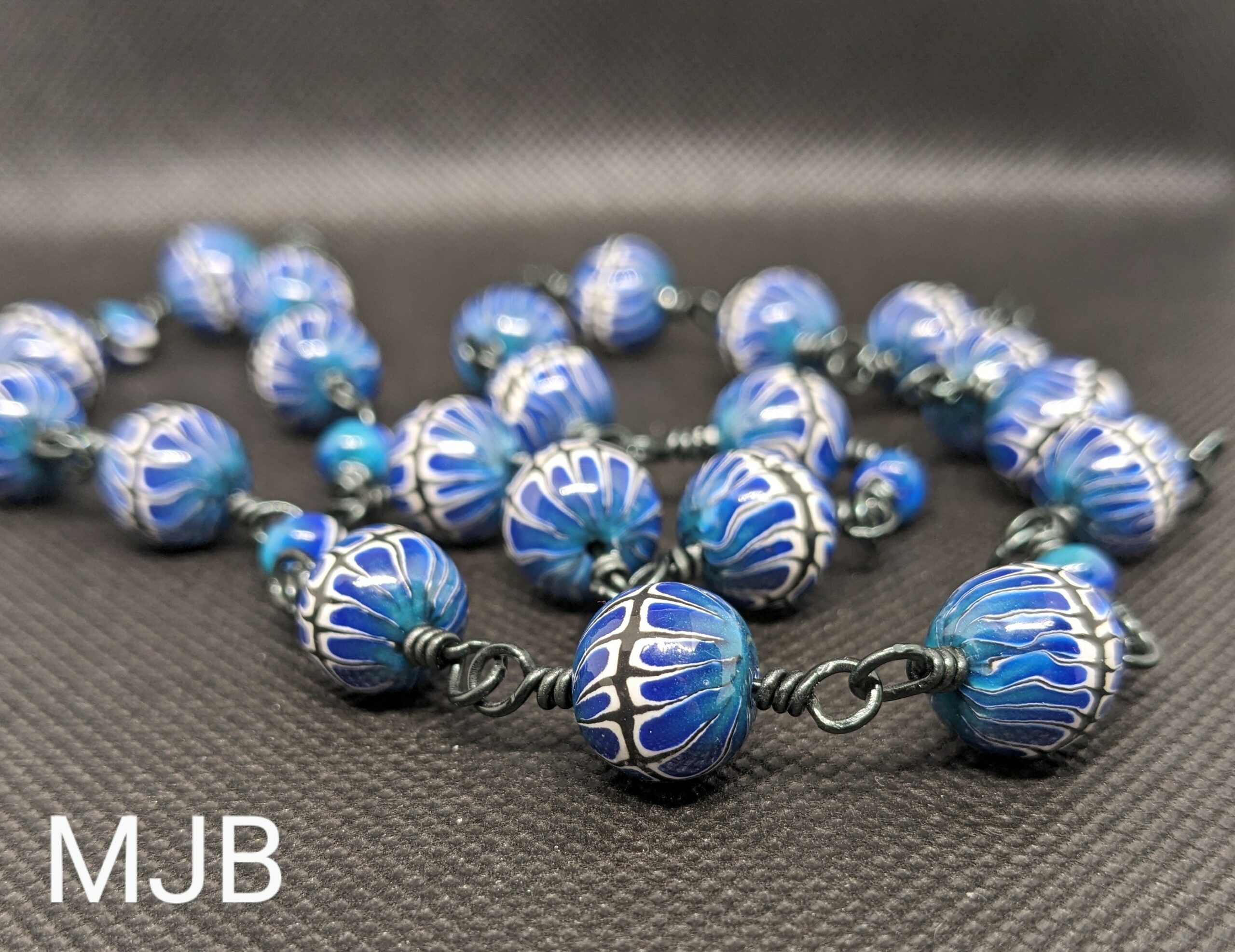
Giving an old cephalopod eye cane new life with a little wirework and a fresh perspective.
Every once in a while, something hiding in the back of the studio decides it is ready for a second act. These cephalopod eye cane beads had been patiently waiting in my stash for their moment to shine. Apparently, they were not forgotten- they were simply in retirement. A little new hardware, some sculptural wirework, and a fresh finish transformed these forgotten cane experiments into finished wearable pieces.
Cephalopod eye canes are one of those polymer clay techniques that look intimidating but are wonderfully rewarding. Layers of polymer clay are shaped, stacked, and reduced to be sliced and reveal a tiny cross-section of the design- almost like discovering a miniature underwater world hidden inside the clay. CorvusFlies (Melanie West) has a great tutorial on Etsy if you need a refresher.
For these pieces, I paired the old cane slices with a little wirework. Adding gunmetal wire gave the beads structure and movement. Sometimes an older piece of clay doesn’t need to be remade—it just needs a different way to be seen.
I also finished the beads with what has become a staple to my polymer clay studio: Eastwood automotive powder coat. Traditionally used to create durable finishes on metal parts, powder coat adds gorgeous gloss and dimension to polymer clay pieces with no VOCs. Products such as the Eastwood HotCoat powder coat I use can be applied (carefully) to cured clay and ‘cured’ again with a heat gun (did I say ‘carefully’?) creating a unique surface effect that wears like a tiny piece of industrial art. I’ll make a video tutorial about how to use it because its fantastic and everyone should experience this magic at least once in their lifetime.
The combination of organic cephalopod eye patterns, mechanical-looking wirework, and a little automotive-inspired shine seemed like the perfect pairing, right? A bit ocean, a bit steampunk, and a bit “what else can I put on polymer clay and see what happens?”
–MJB
Materials: Premo! polymer clay, gunmetal wire, and Eastwood HotCoat powder coat powder.