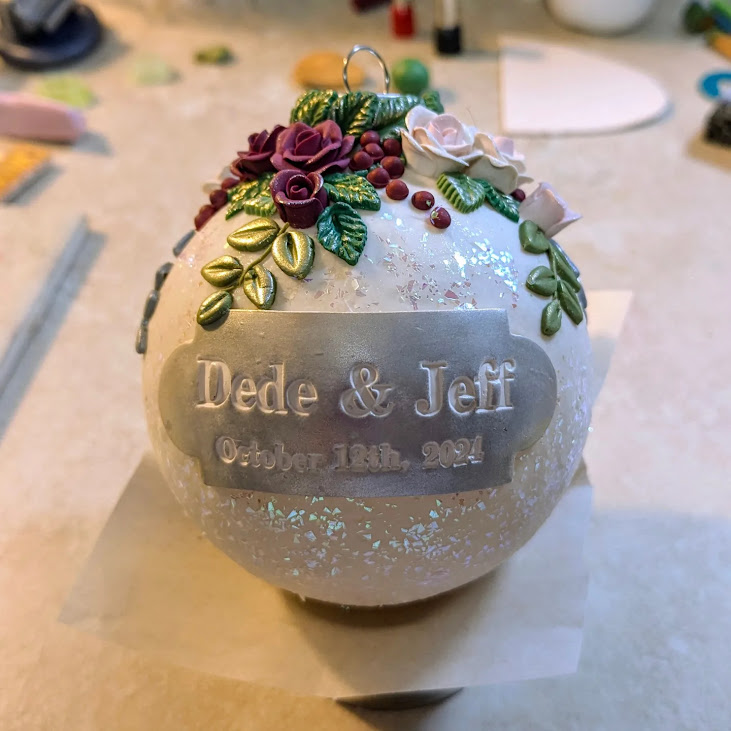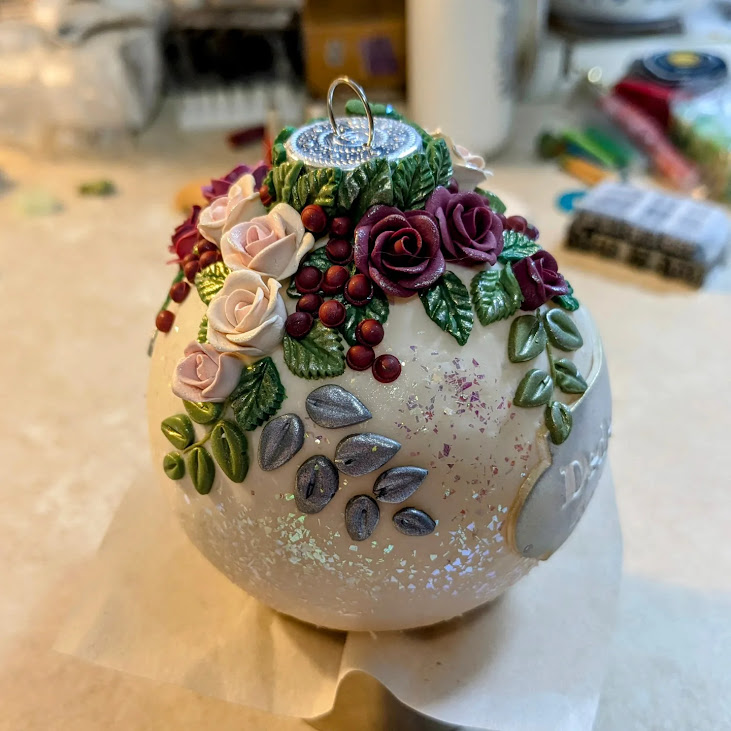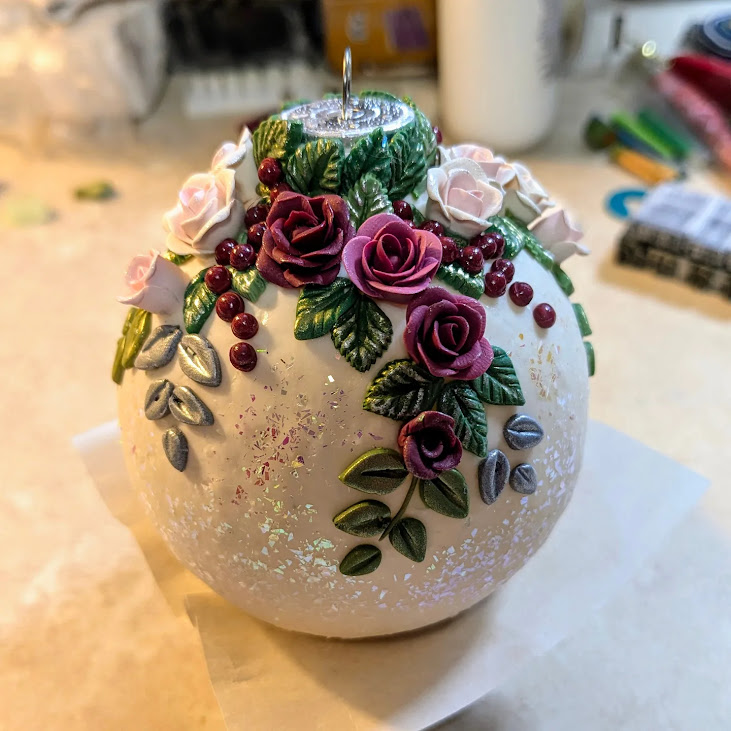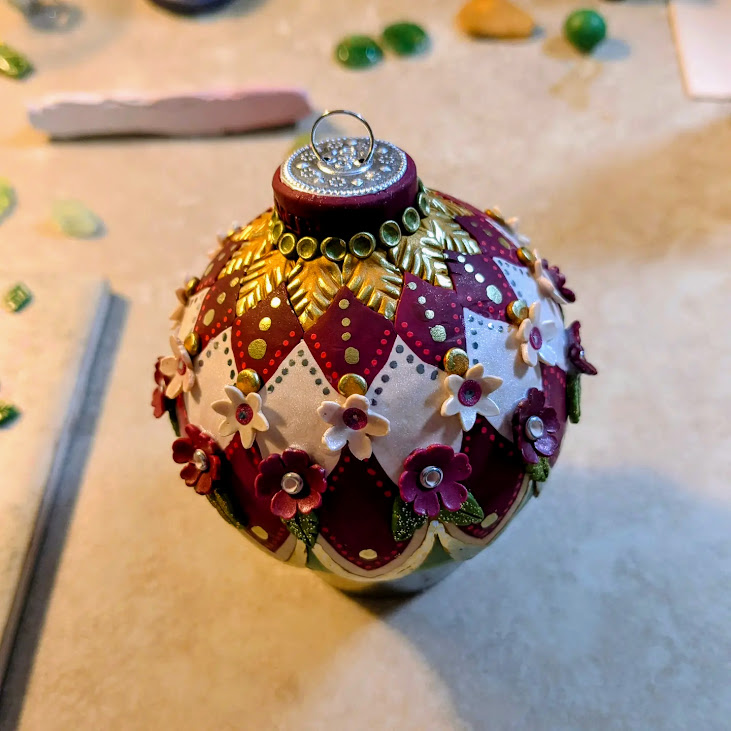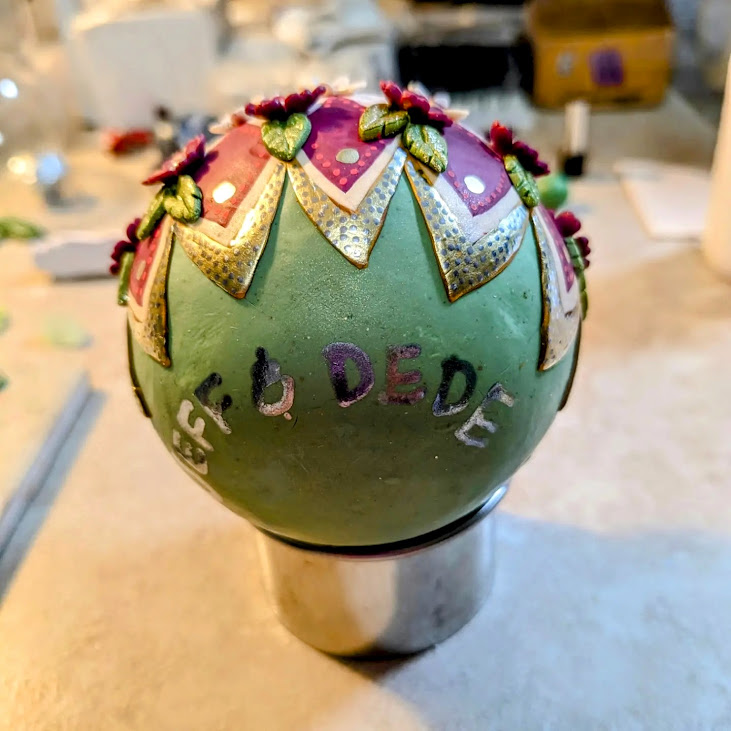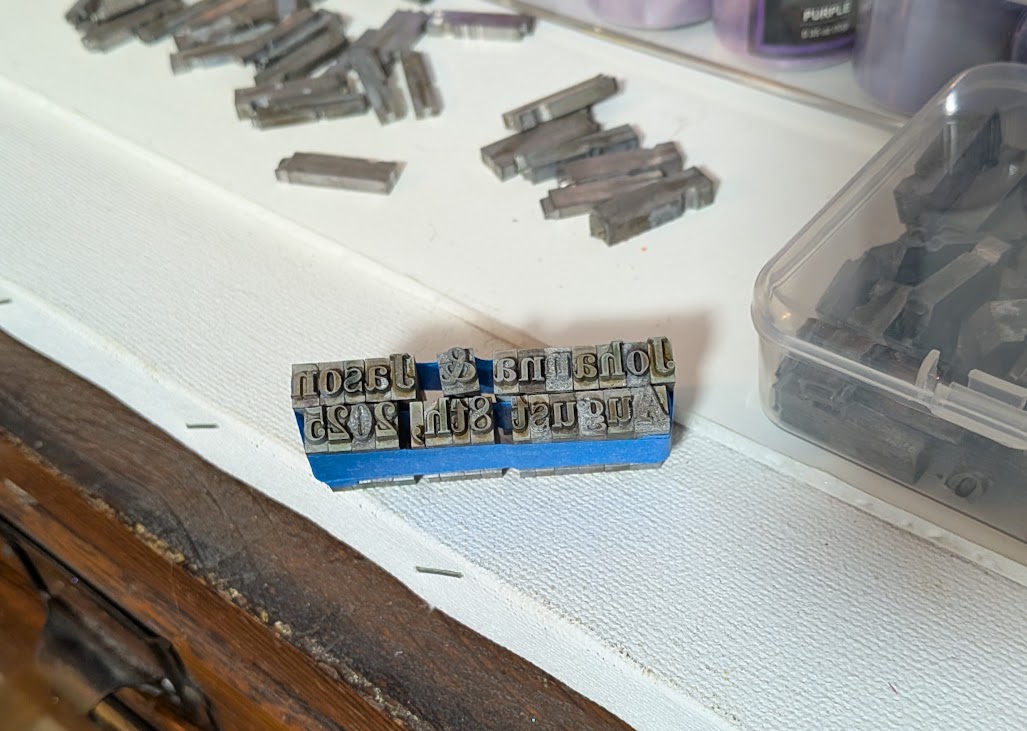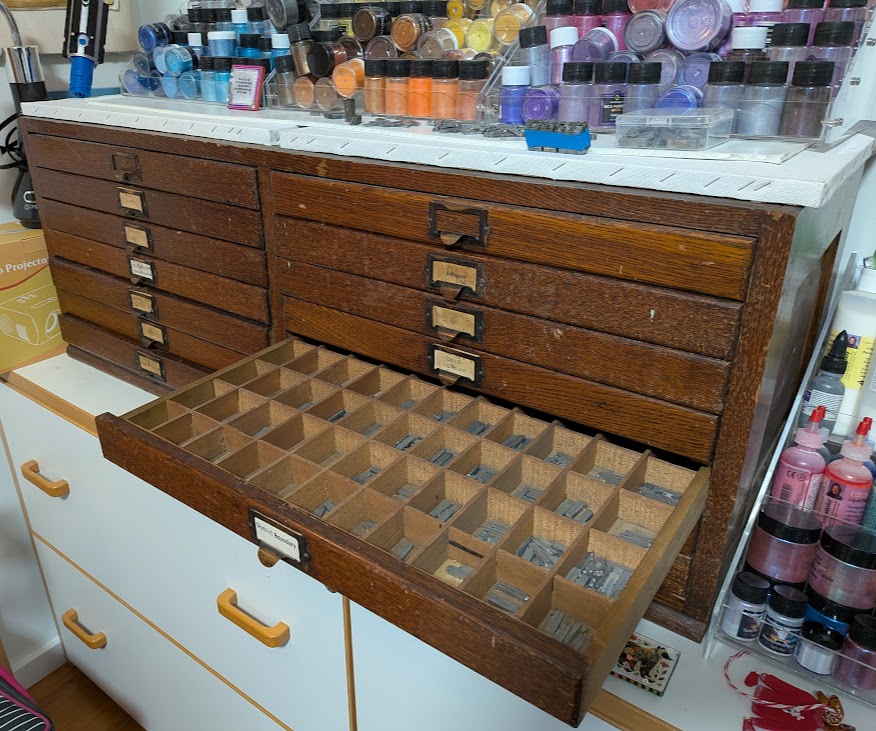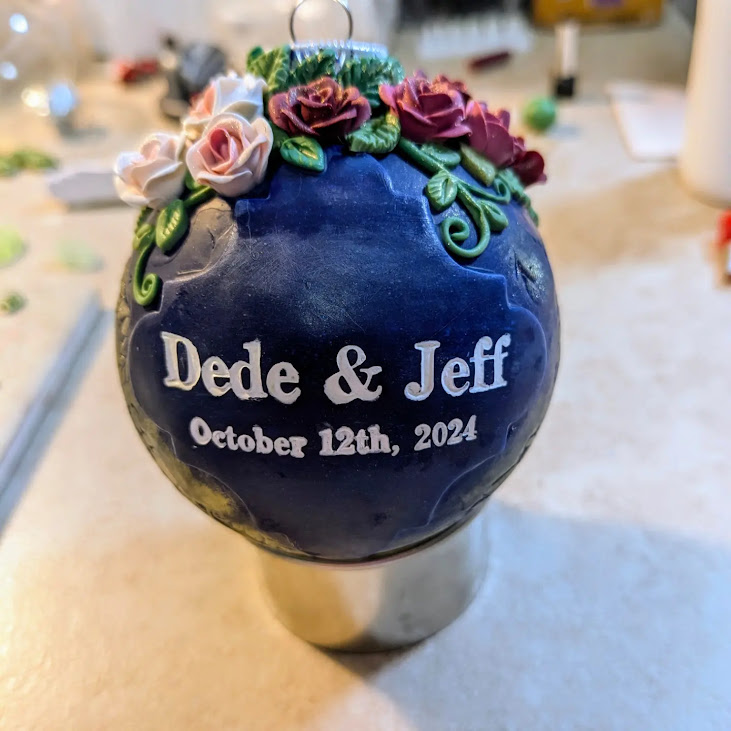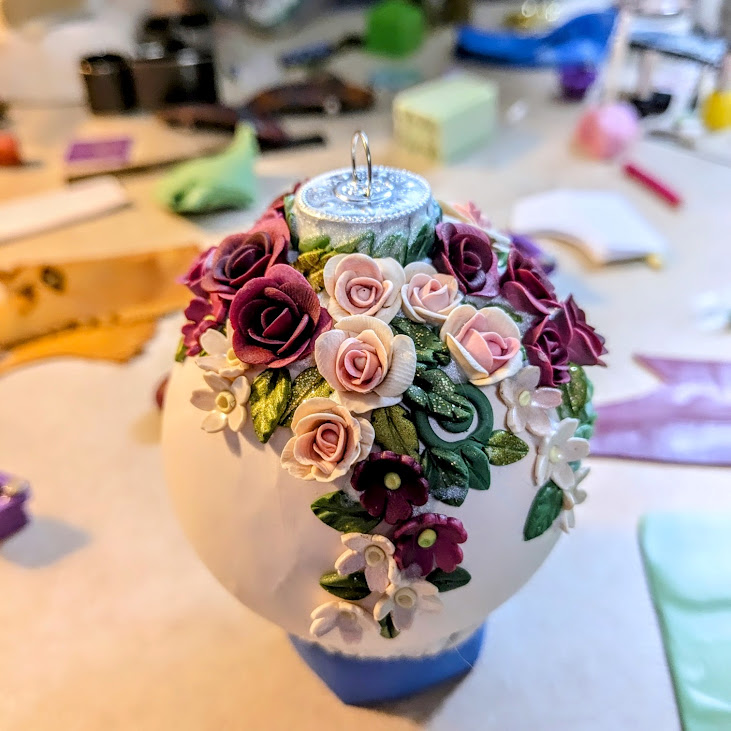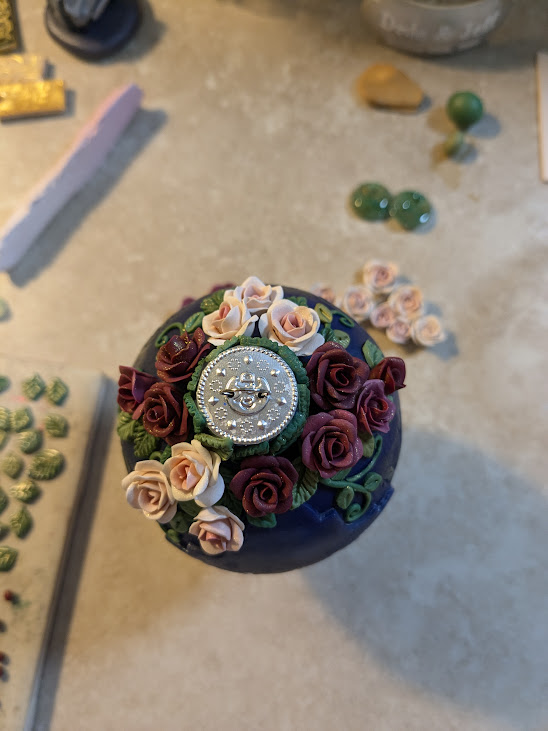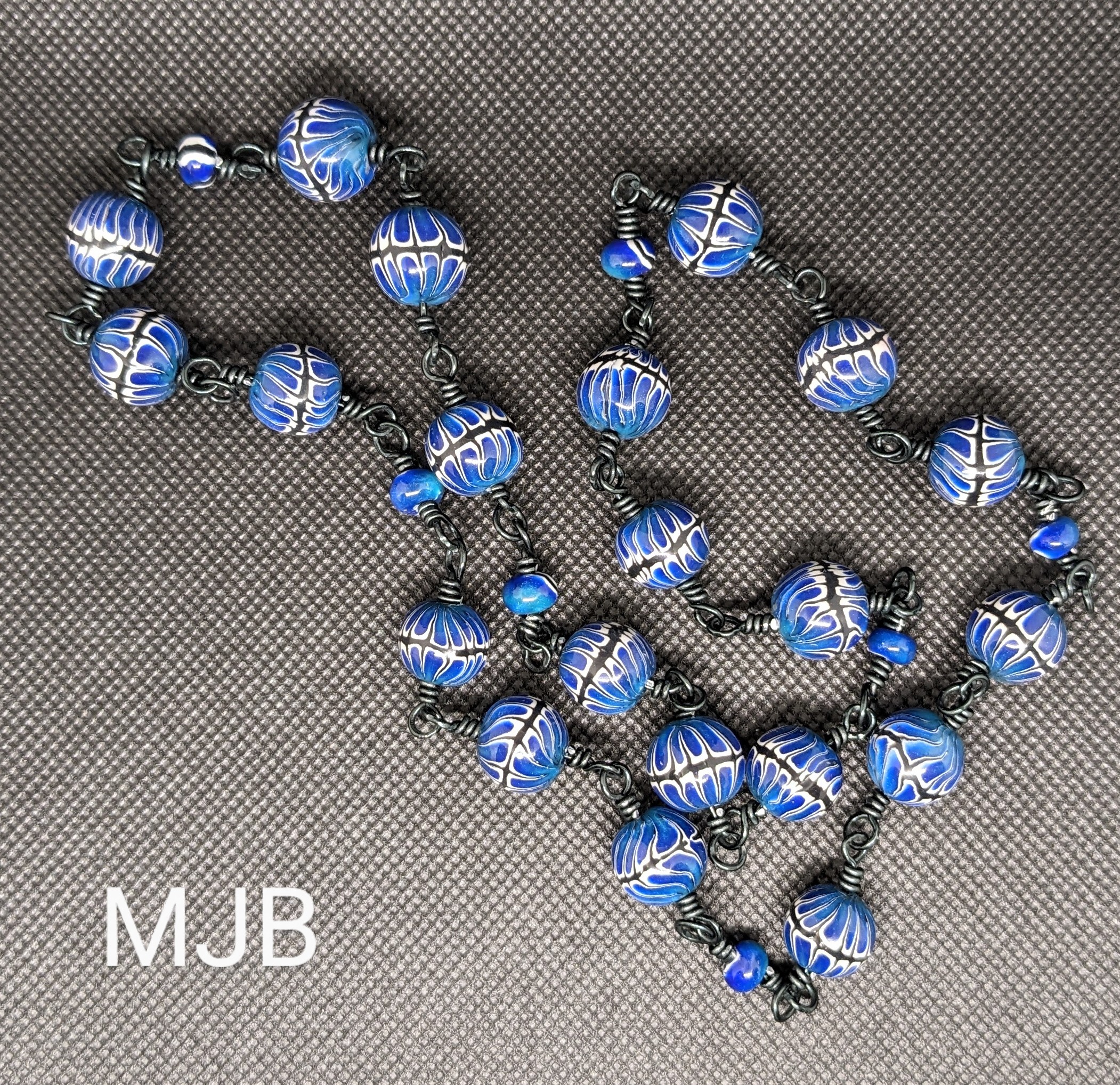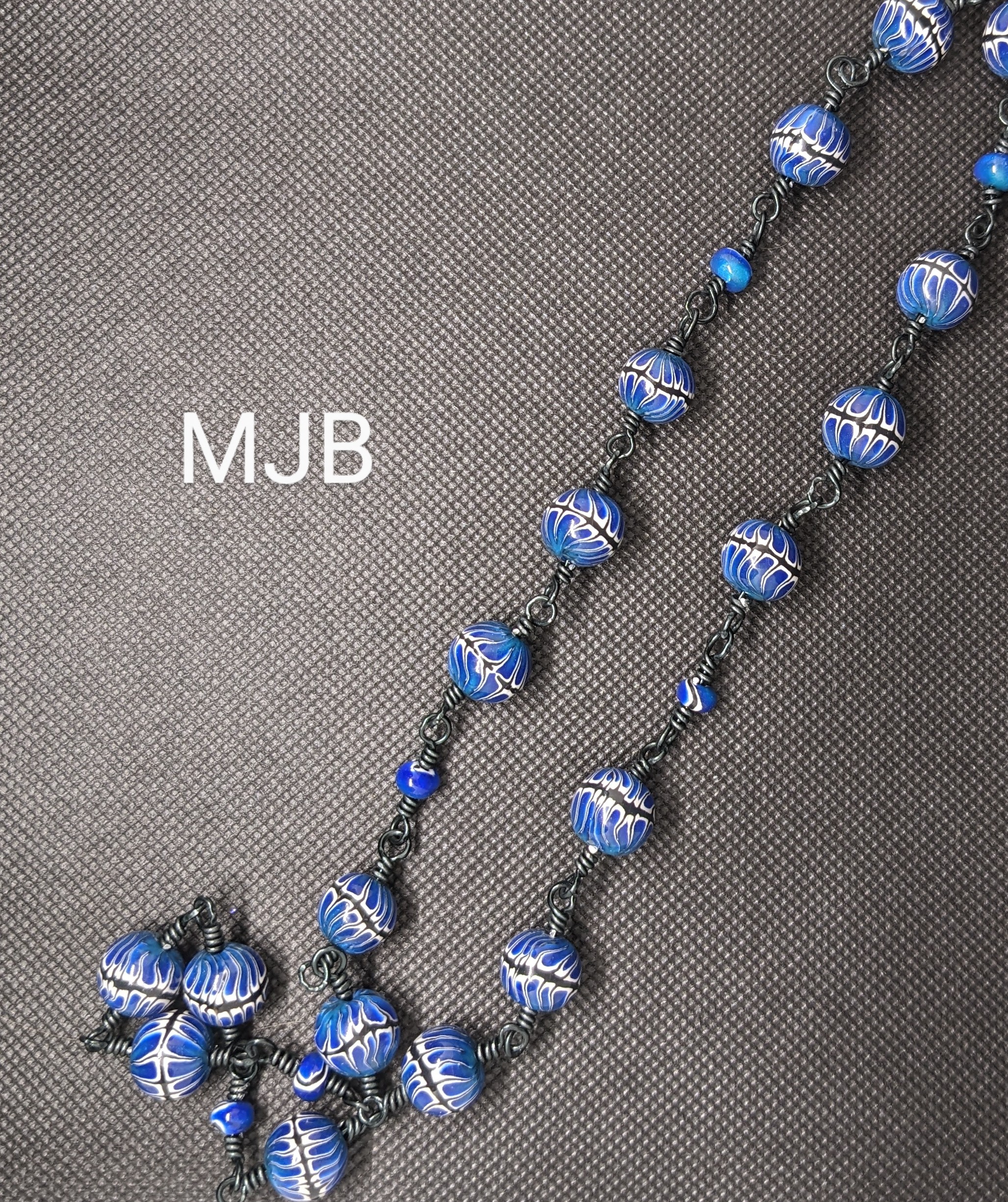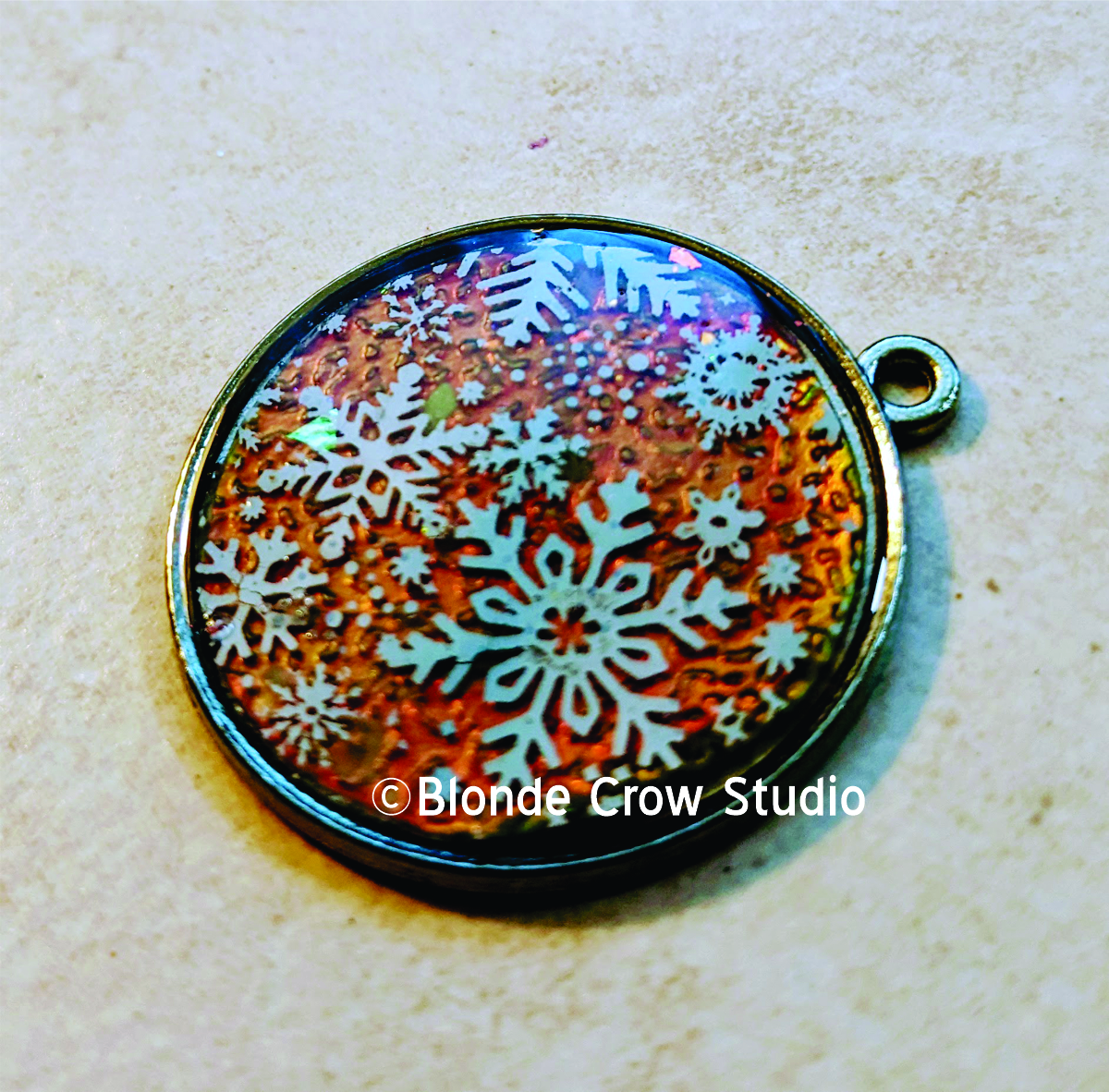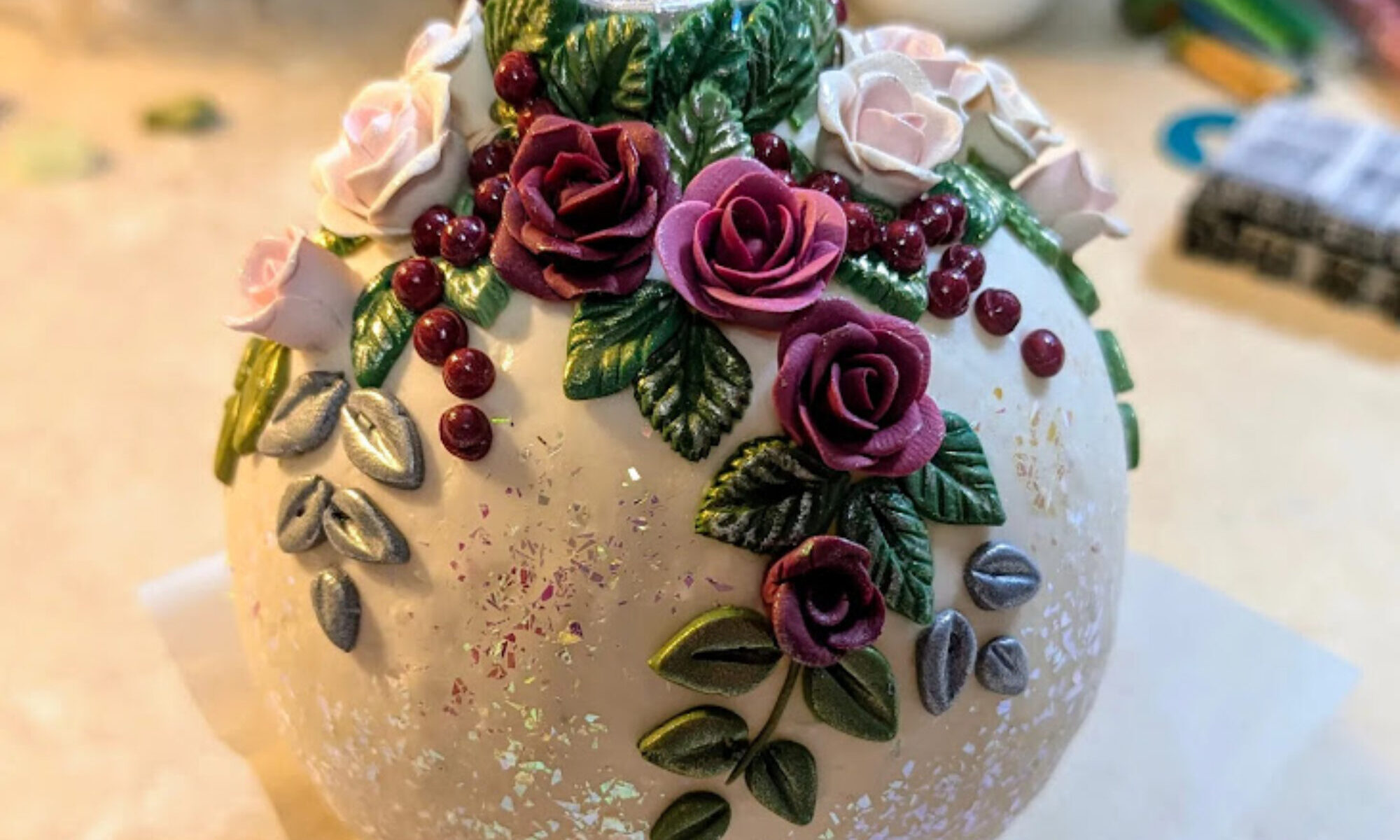
No new techniques here but two dear friends got married and I finally thought of a gift for the couple who has everything- a handmade, personalized ‘First Married-Christmas’ ornament in their wedding colors. I made four of them before I settled on two that were nice enough to gift. The names were stamped with lead ‘hot type’ printing stamps used back when we printed our maps on a press decades ago at the map company.
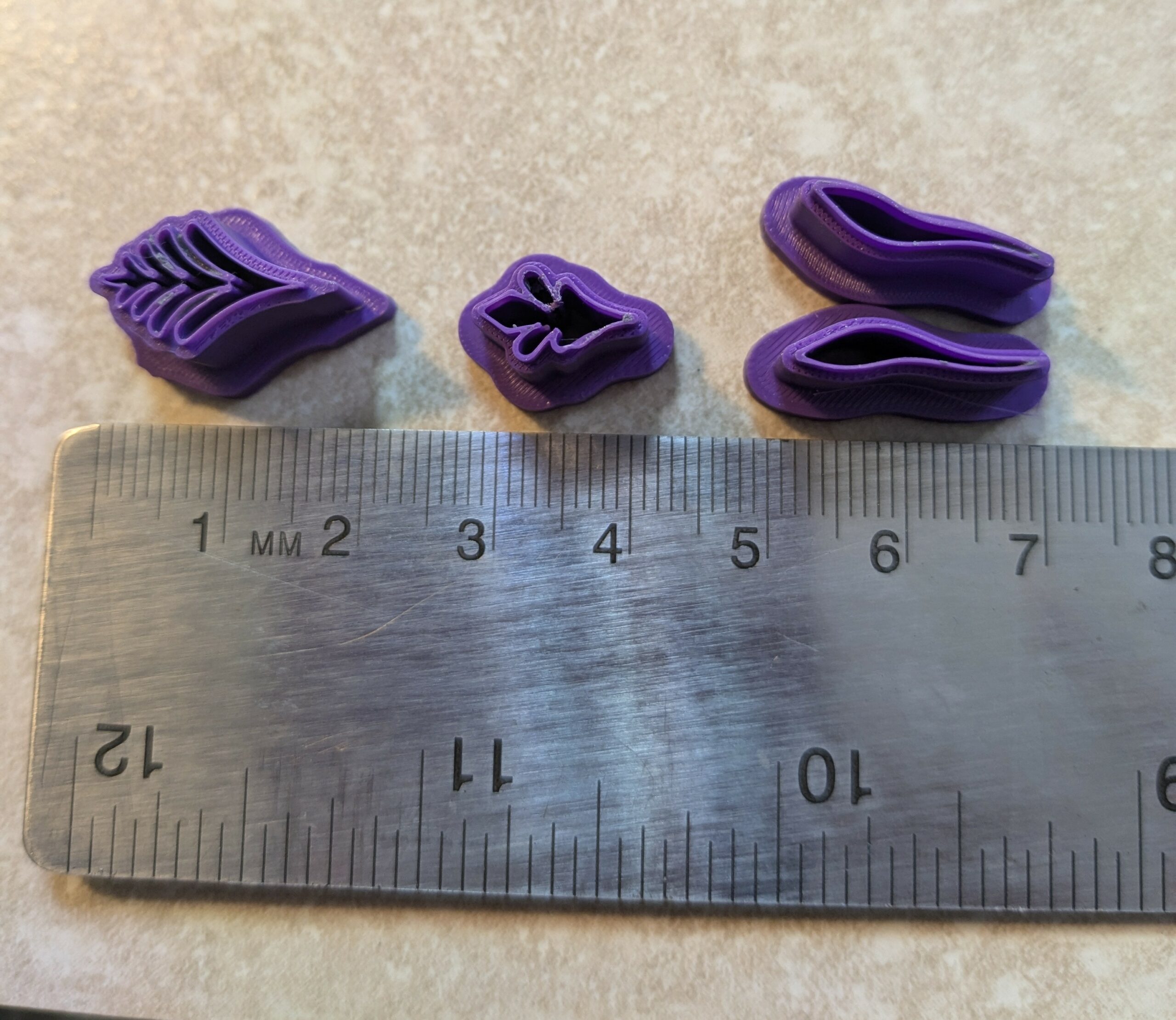
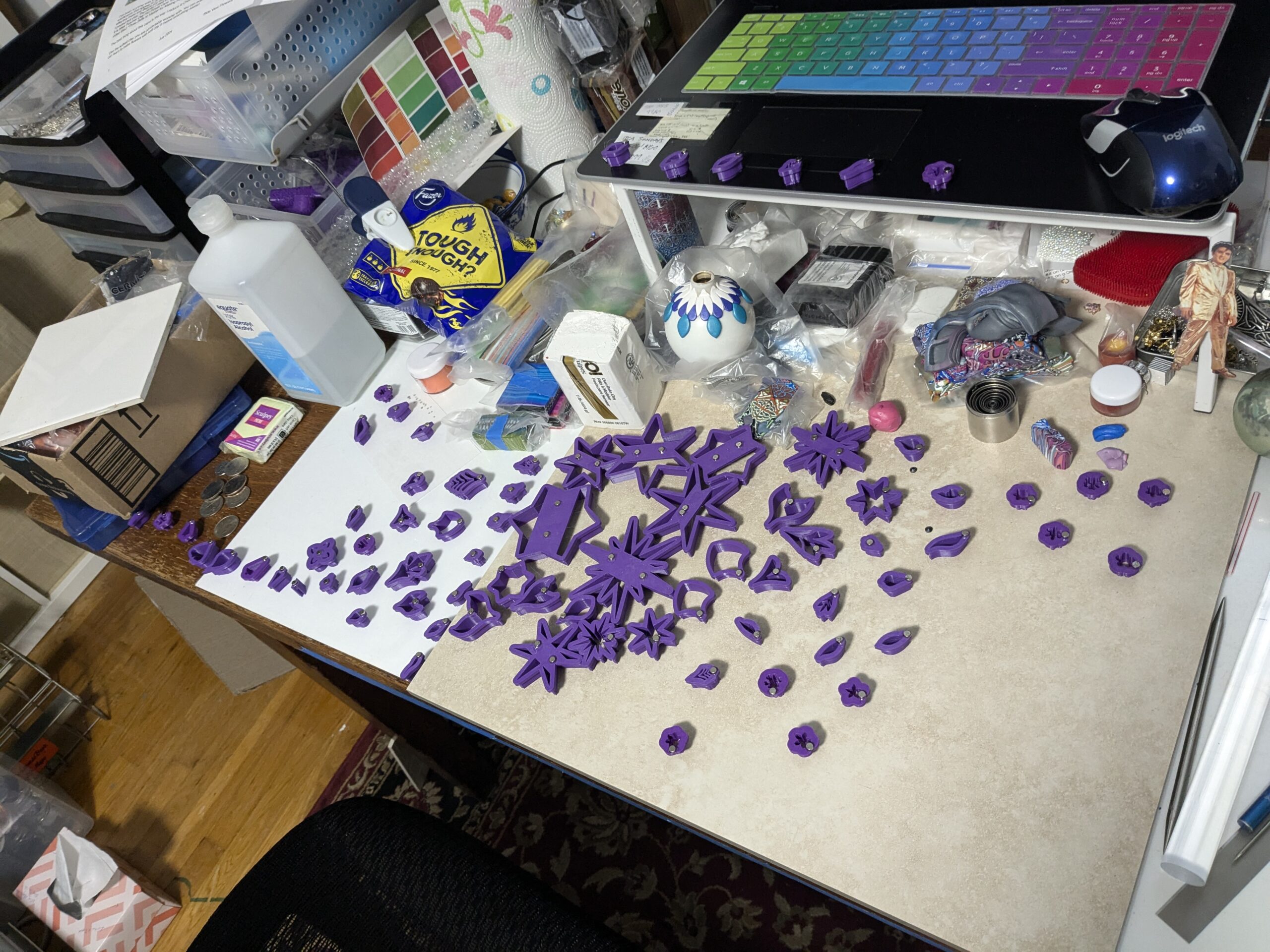
This idea is just clever enough that you may want to try it in your studio, too. I decorate a lot of hanging mosaic-type ornaments and there are many shapes I repeat in clay. I drew a page of shapes I wanted and gave it to my friend, Kim Day, who made some beautiful new 3D-printed cutters and stamps. Some were 1cm and under and it was difficult to see which shape I needed without picking up and turning over five others first. So how can I display all the cutter’s cutting edges but not be laid out taking up valuable workspace?
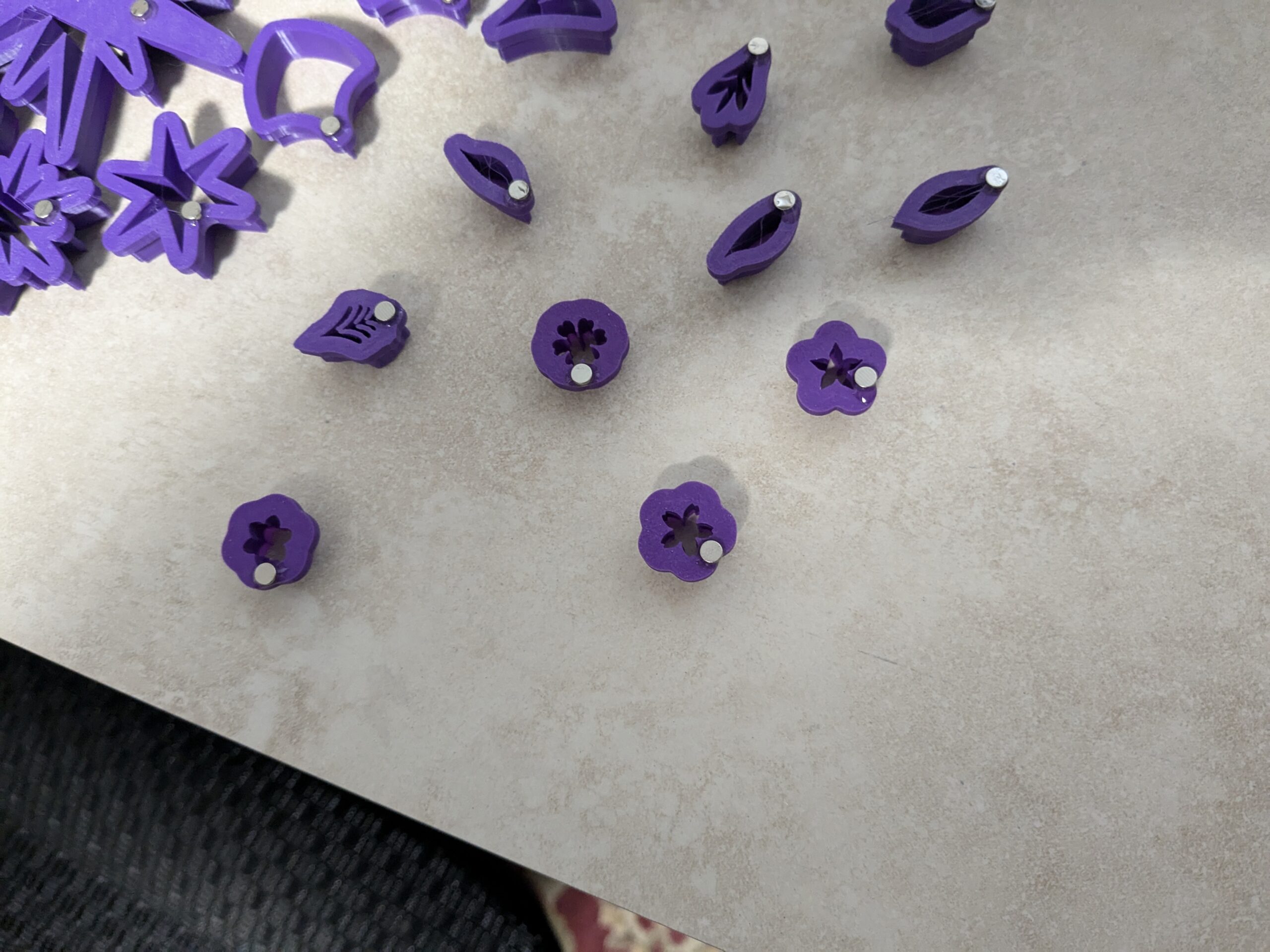
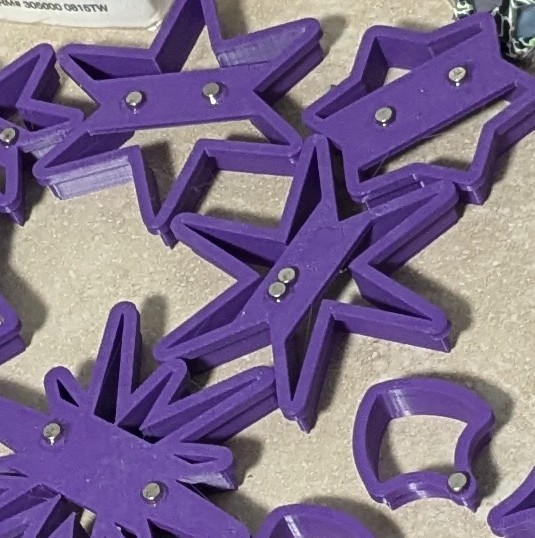
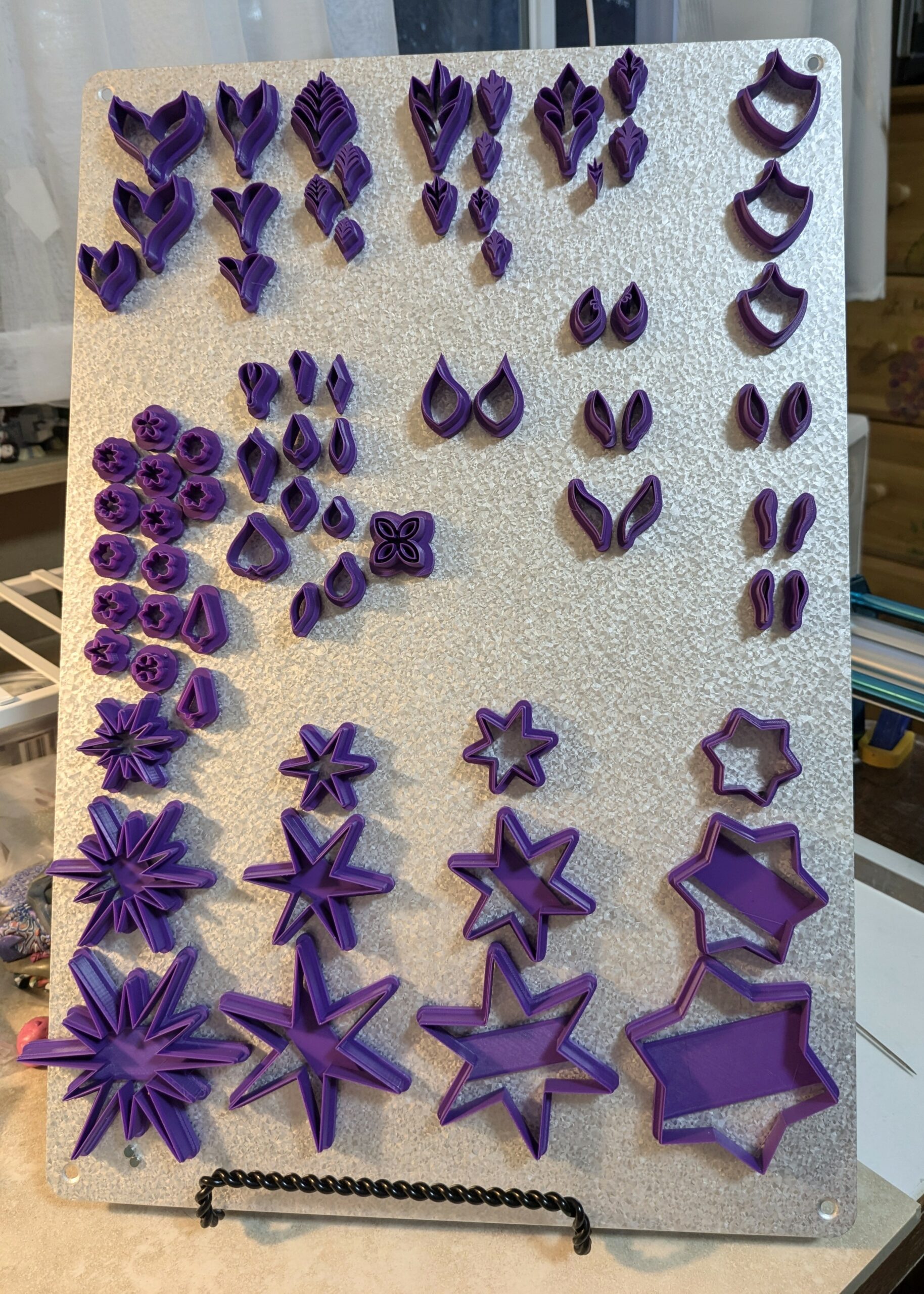
Bing! I had an idea; I bought tiny neodynium magnets (4mm x 2mm) and used a two-part epoxy to glue them onto the pushing side of the cutters. When they were dry I put them up on a piece of magnetized sheet metal and set up upright on a stand at my workspace. Voila! All those tiny cutters and stamps at a glance ready to use.
I’ve got room on my magnetic board to put up the rest of my teeny tiny cutters, too.
Teeny tiny cutters!
Many were smaller than these
Give them lots of space
Tiny magnets glued to the pushing edge of tiny cutters
Letting the epoxy set overnight
Romeo and Juliet
This magnet’s attraction was so strong to it’s partner that it slid to be beside it. I noticed it the next day once the glue had set, so I hope they’re happy.
Finished magnetic cutter board!
Yay! a stand up space-saving way to display these cutters while I work with them. The magnetic board easily slides into a bookcase when not in use.
A FEW TIPS – You don’t need to mix multiple small batches of two-part epoxy like I did and dip the magnet in it with tweezers, then apply to the cutter back. Messy. Just use a fine-tipped bottle of strong glue. – Do your gluing on a large surface so you can space out your cutters/stamps while the glue sets. Place them far enough apart that the magnets won’t suddenly mosh into another cutter. You’ll have to redo it. – DON’T use metal tweezers; use plastic ones or just your fingers. Even the wisest among us try to use metal tweezers in the beginning and soon learn why it’s a dumb idea.
Here are my entries in the NWPCG Artist’s Swap at the end of May. The theme is ‘Things with Wings’. All of the clay is Cernit, along with mica powder, miniature metal ‘gears’ and watch parts, magnets, and a lot of patience.
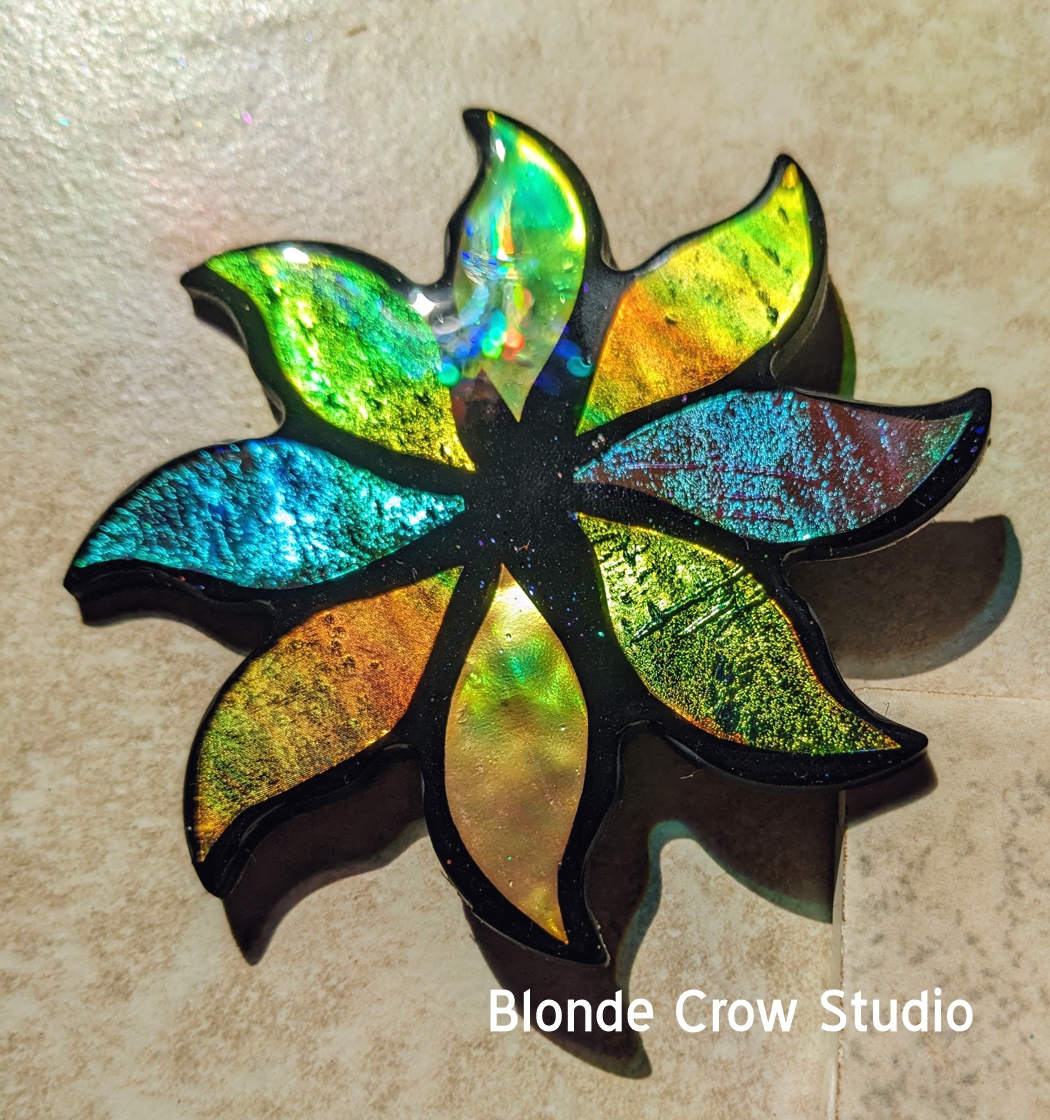
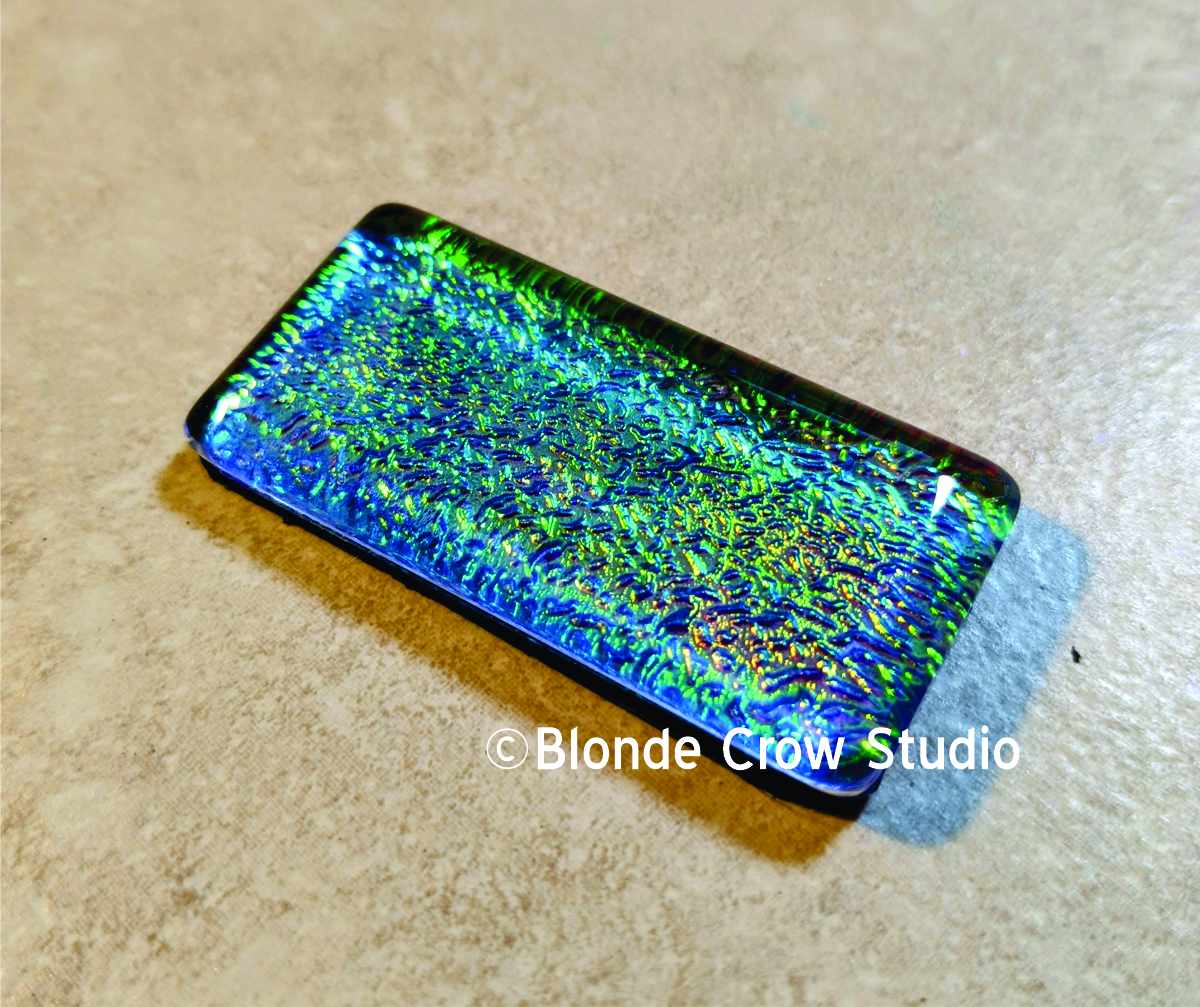
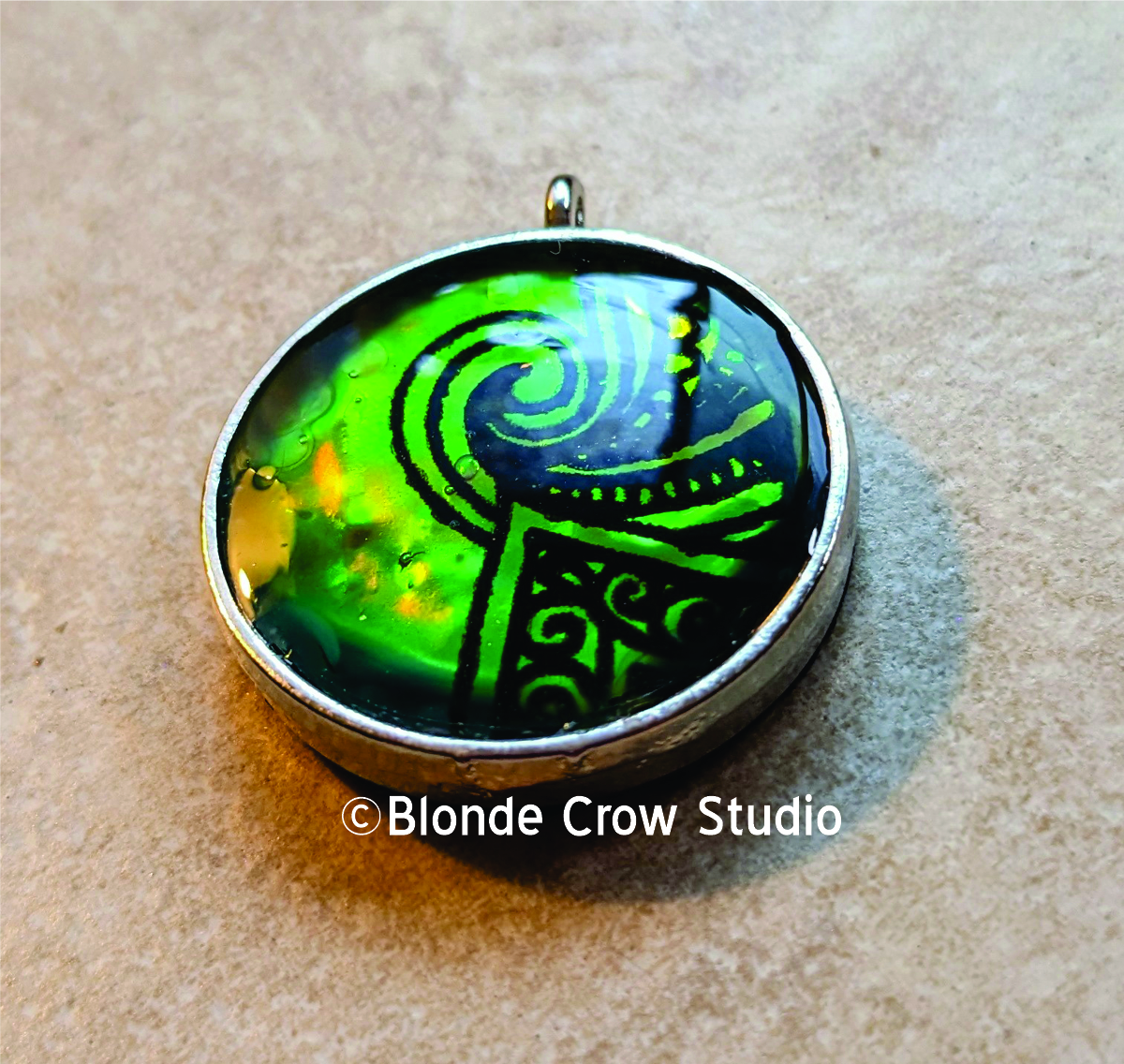
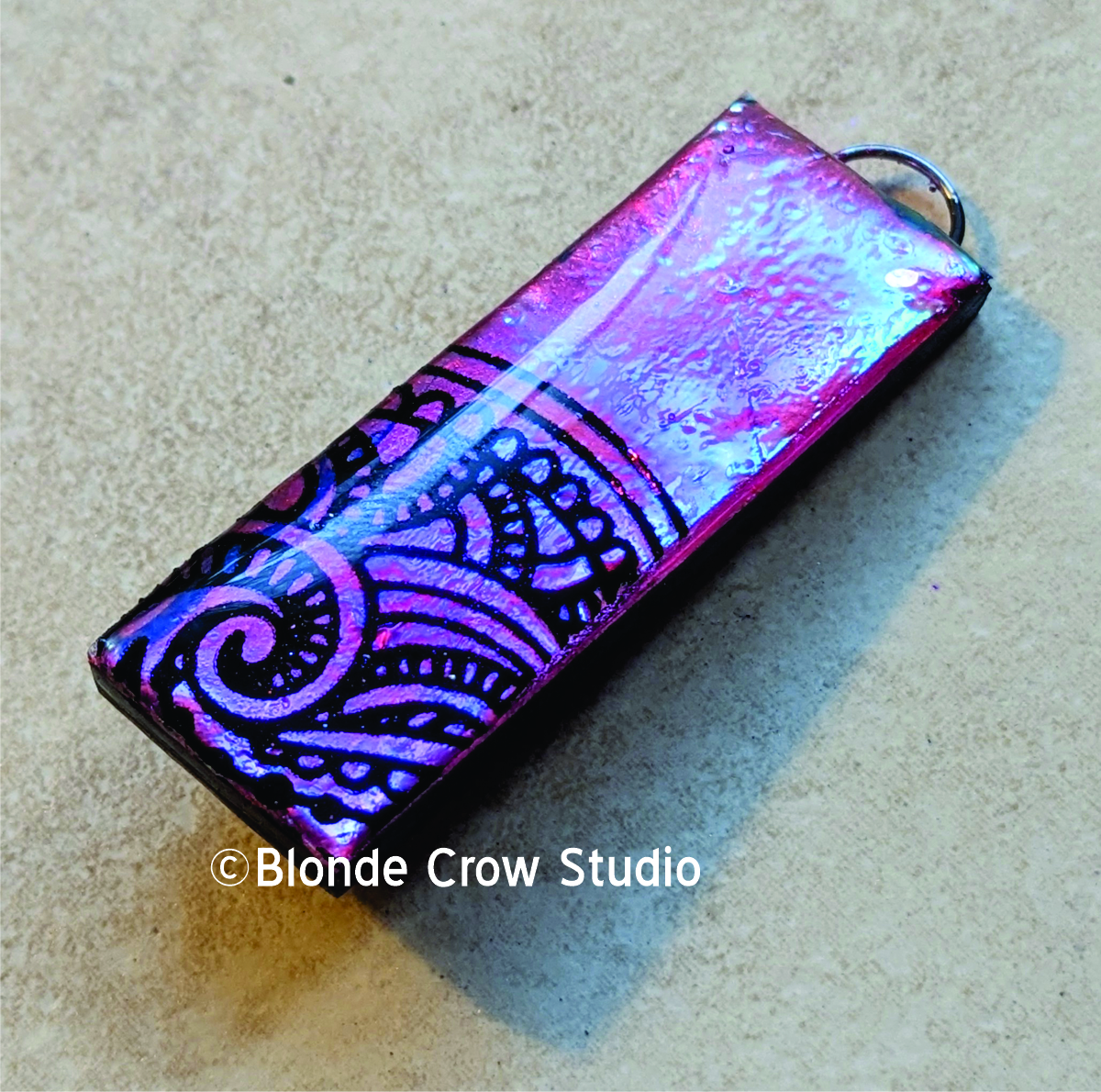
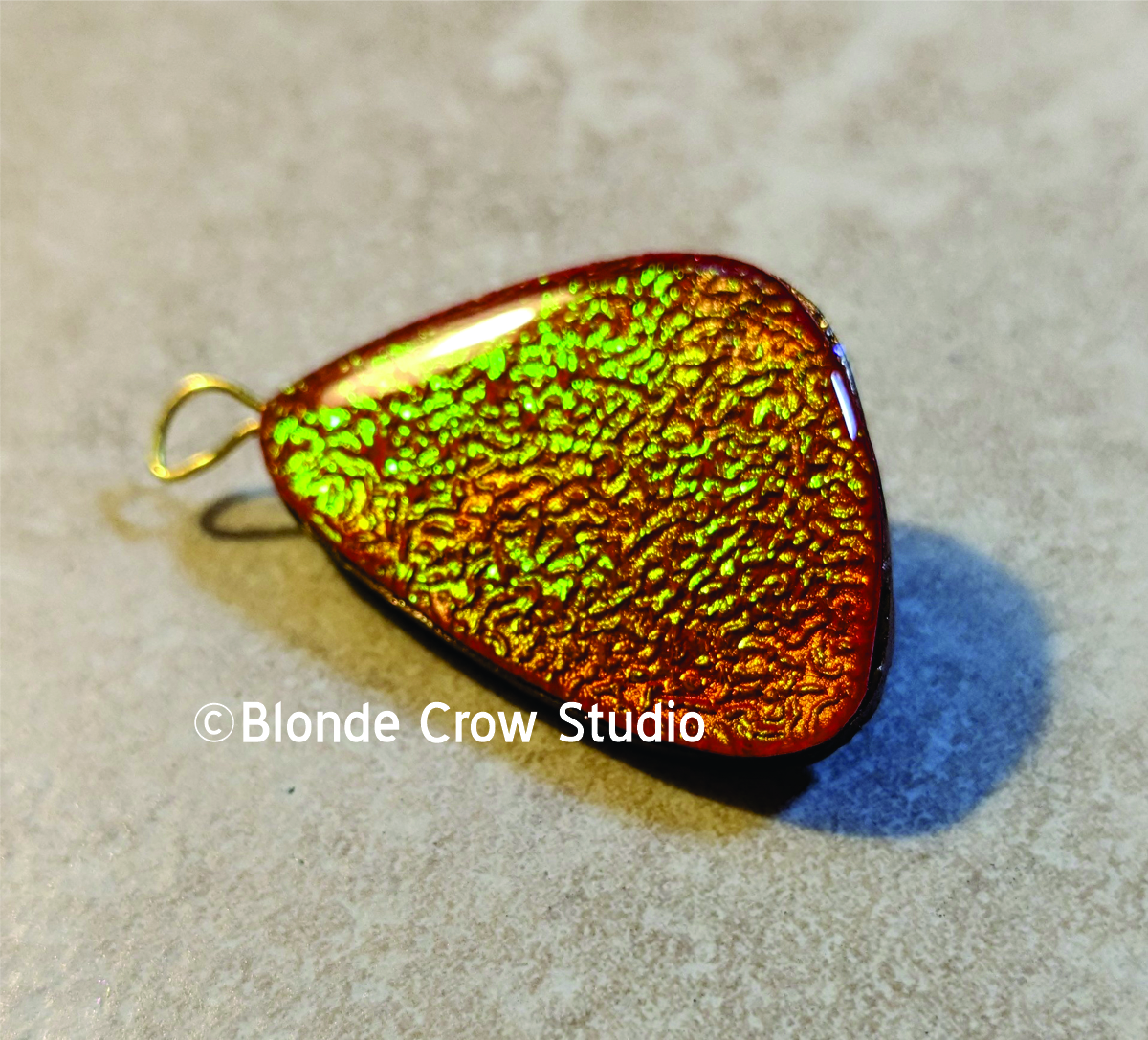
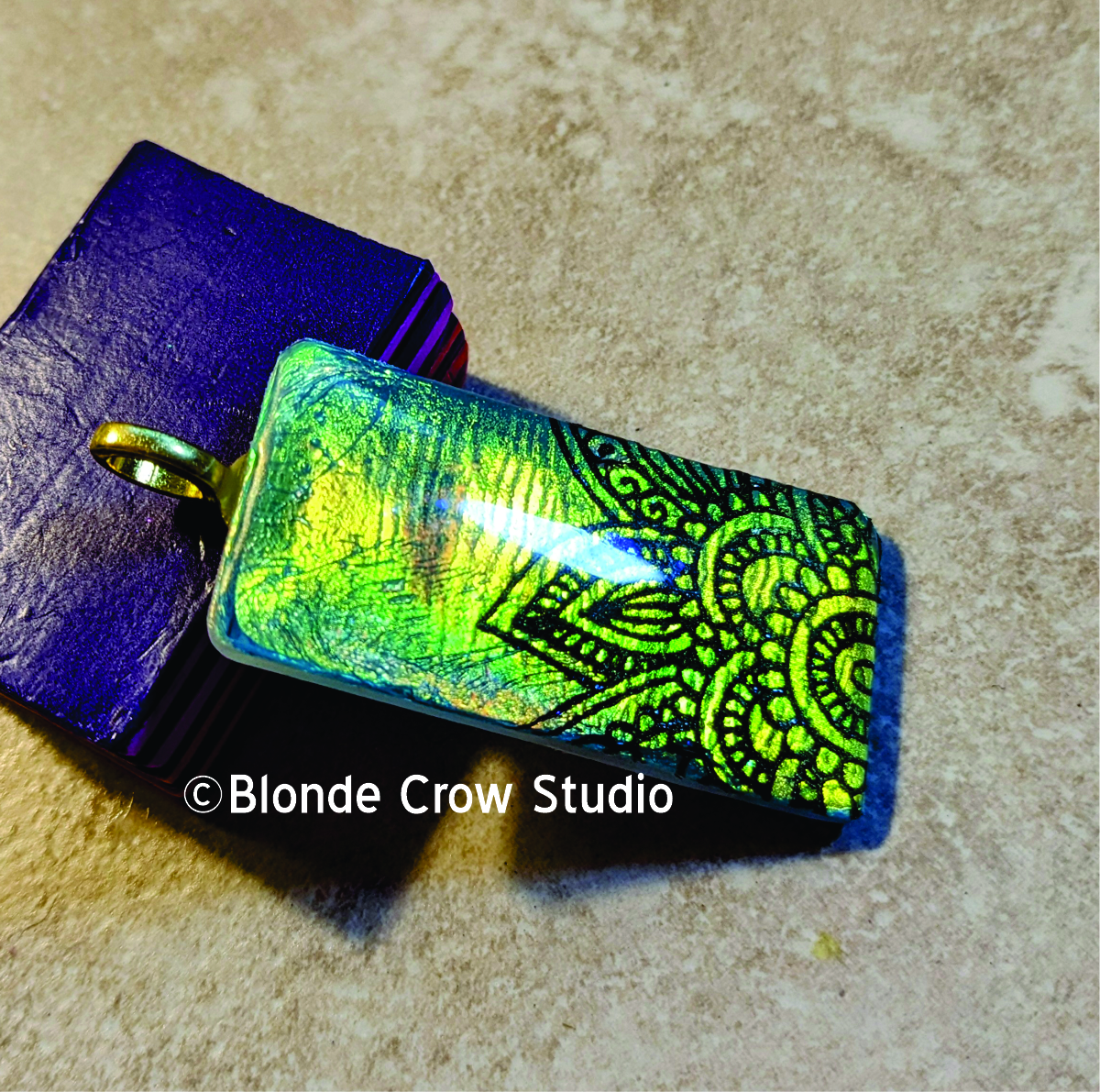
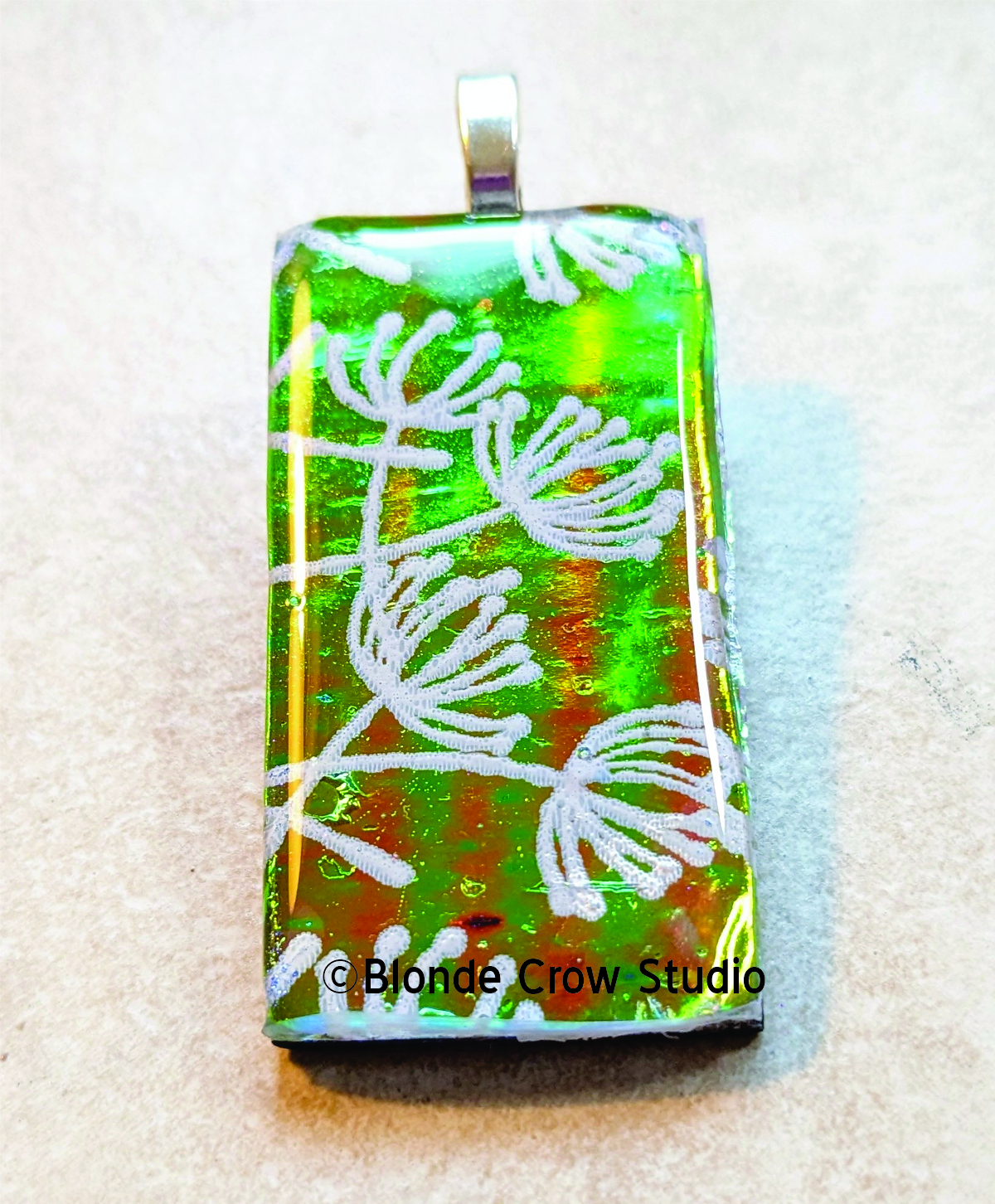
I’ve created the best and easiest polymer clay faux dichroic glass you’ll ever make. It’s not made of exclusive or expensive materials. It’s not made with alcohol inks that may fade over time. If you follow my techniques, all you’ll need to get started is cheap iridescent cellophane (the kind in which gift baskets are wrapped), polymer clay, liquid polymer clay, and a top coat- I prefer UV resin. Read the tutorial & materials list here
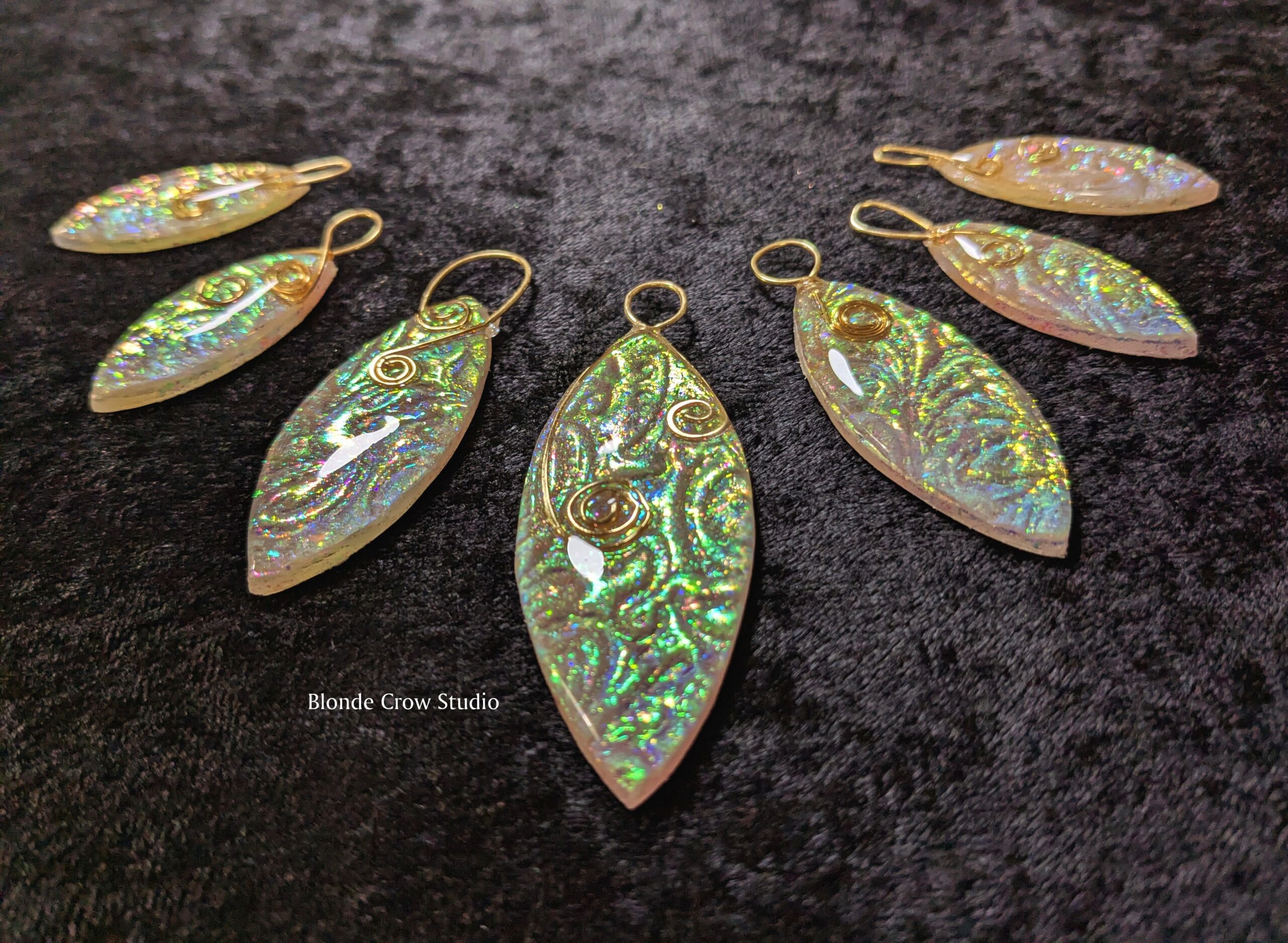
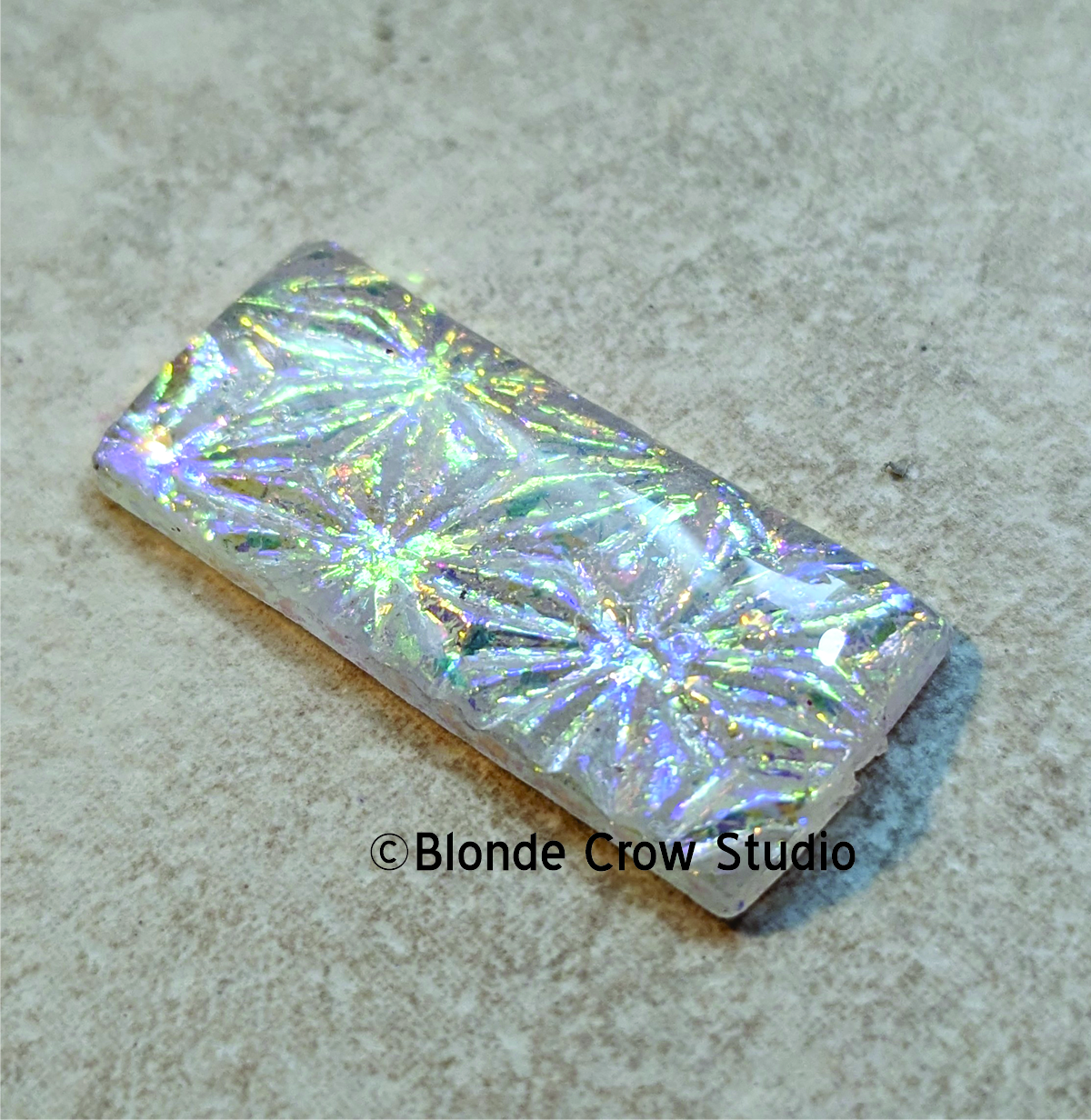
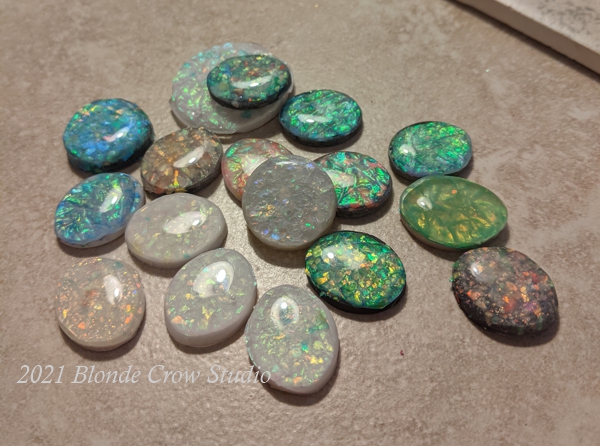
These easy faux opals were created with polymer clay, glitter, cellophane, and UV resin.
I studied a lot of opals from around the world before deciding that Australian opals from the Coober Pedy mines were the most beautiful- and the ones I wanted to ‘recreate’. Plus I was intrigued that 60% Coober Pedy residents live underground to escape the intense winter heat.
I built on my experiments making faux opals a few years back and a LOT of failed attempts more recently before I came up with these techniques. In September I demonstrated to my polymer clay guild step-by-step how I did this with easily accessible and inexpensive materials.
For the last month I’ve been creating polymer clay turquoise. After eight attempts to perfect my former technique, I think I have it now! I made a tutorial for making the beautiful turquoise with as many or as few inclusions as one likes, and it can be adapted to any shade of turquoise one prefers, of course. You need patience for this, I’m afraid. This technique is in two steps and includes drying time which can be anywhere from a few days to a few weeks, depending on your environment.
Quality turquoise is an opaque, clear blue mineral. Early stones were found mostly in the arid regions of Iran and Afghanistan, hence the name ‘Persian Blue’. Rainfall infiltrates the soil and rock, dissolving small amounts of copper. When the water evaporates, the copper combines with aluminum and phosphorus to deposit tiny amounts of turquoise on the walls of the host rock. The more time goes by, the more turquoise fills in cracks. If eons go by, the turquoise will have less inclusions than ‘newer’ turquoise that has more matrix of the host rock. The turquoise will have a green tint when small amounts of iron is substituted for aluminum in the structure.
Creating faux turquoise from polymer clay gives us so many options- host rock with iron pyrite (Fool’s Gold), just a little matrix of more quality turquoise, and any shade of blue, teal, blue-green, greenish-yellow that we like. See my Faux Turquoise Tutorial here.
Since April, the Northwest Polymer Clay Guild is meeting on Zoom twice a week. I had a space downstairs set up while I’m getting my clay studio ready. Here’s a few dining table creations…
I suppose these could be Seattle Sounders fan beads as well as Seahawk beads- slices of striped cane with metallics wrapped around scrap core, shaped on the ends and twisted for interest.Cane adapted from Meg Newberg’s cane tutorial at Polymer Clay Workshop……and what I made with some slices of it, along with a few tiny ornaments with my Folk Art kick.Quite smallTiny vessel made from another Meg Newberg caane variationAnd yet another cane, a red tile with a translucent backgroundA little Folk Art redbird, simple and sweet
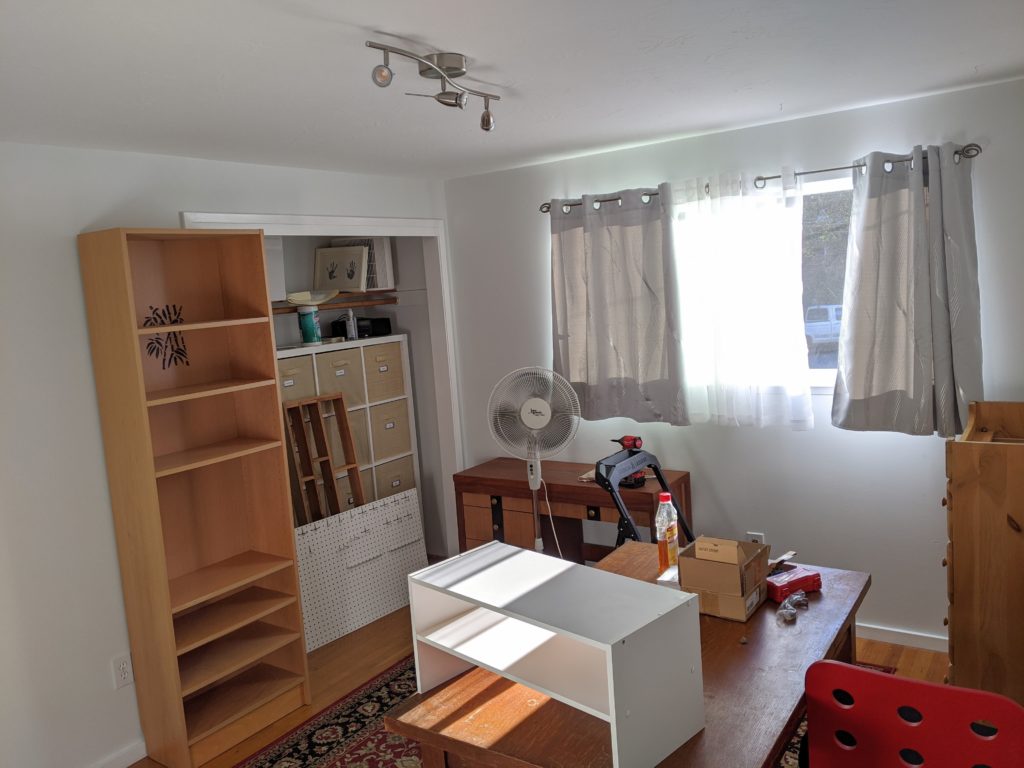
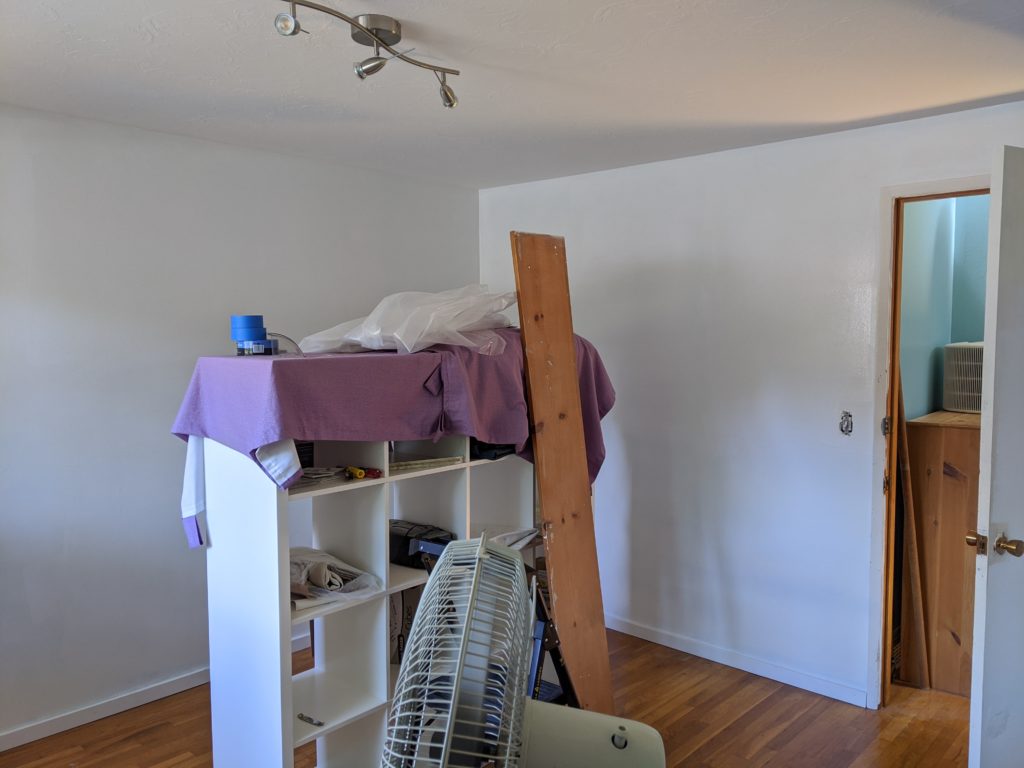
Scraping, sanding, spackling, sanding, priming, sanding, painting, cleaning… finally finished! Hung new curtains, moved in a few things but like all new studio configuration, it’s subject to change to what works best.